
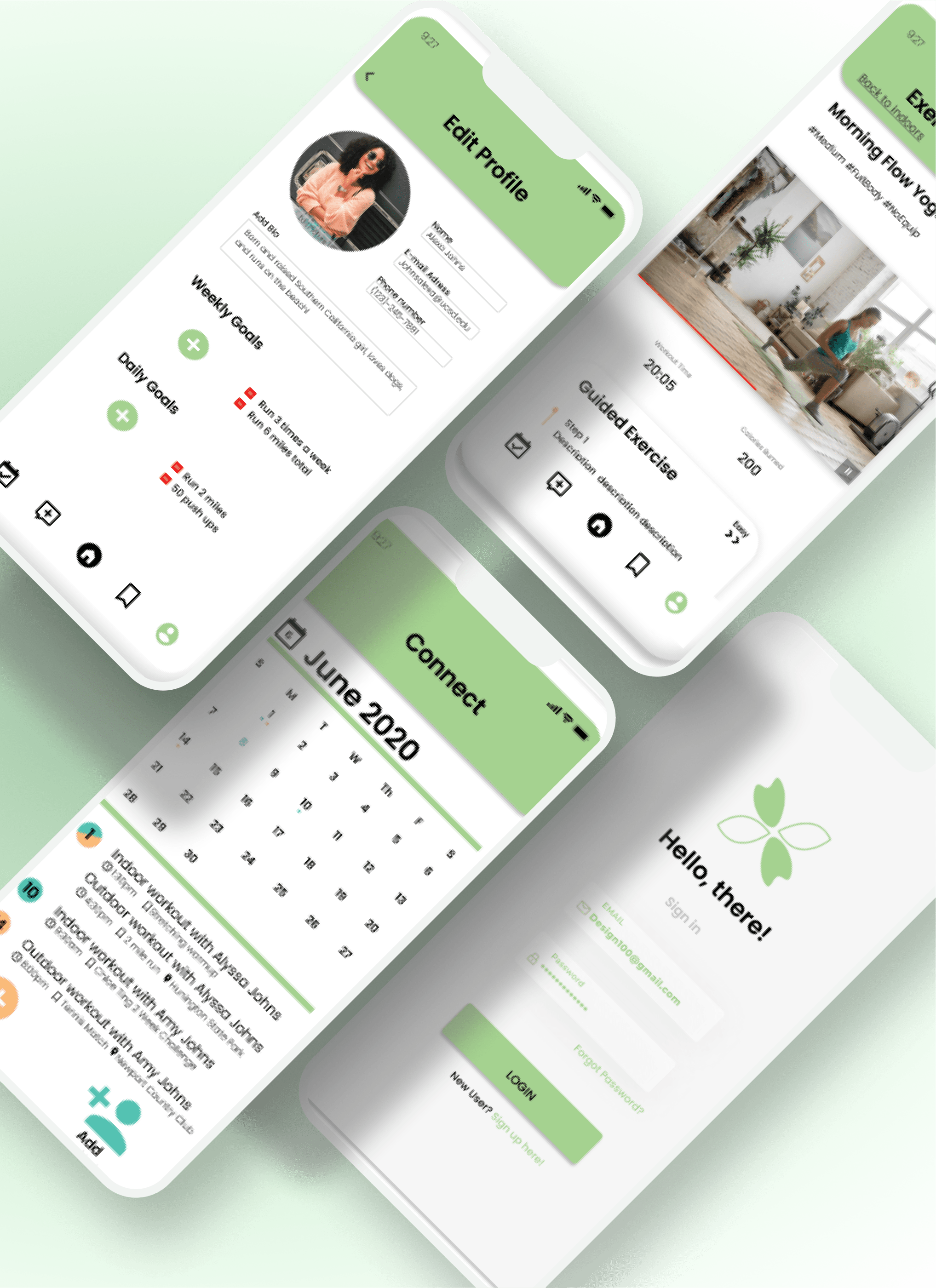
Happy n' Healthy is a fitness and health app that provides three things: helping routine exercisers to keep on track and build their reps, assist beginners by offering structured routines and 'fitness buddies', and lastly provide multiple indoor and outdoor workout routines. This provided strong foundations in the end to end design process as well as user testing methodology.
* Winner of the IEEE Quarterly Challenge
* Winner of the Covid-19 Hack Challenge
1. Design an app that encourages exercise and fitness while stuck at home.
2 . Create an easy segue for those who don't regularly exercise to start a new routine.
3. Learn about the design and testing process in a team setting.
Happy n' Healthy is a health and fitness app that caters to routine exercisers, beginners, and other diverse workout needs, providing a social space with structured routines. This was an end to end project, starting with research in online community explorations, surveys, and one-on-one virtual interviews. Prior to drafting, a competitive analysis of similar apps was performed and after careful note - taking, prototype iterations began. Five user tests on low-fidelity prototypes informed iterative improvements aligned with user preferences before our final product was launched.
COVID-19's unexpected impact on daily life took a toll on people in many ways, from mental health to physical well being. My team and I decided to work with both issues presented; that is social isolation and the transition to home workouts. In other words, we needed to create a way users can keep up their health both mentally and physically.
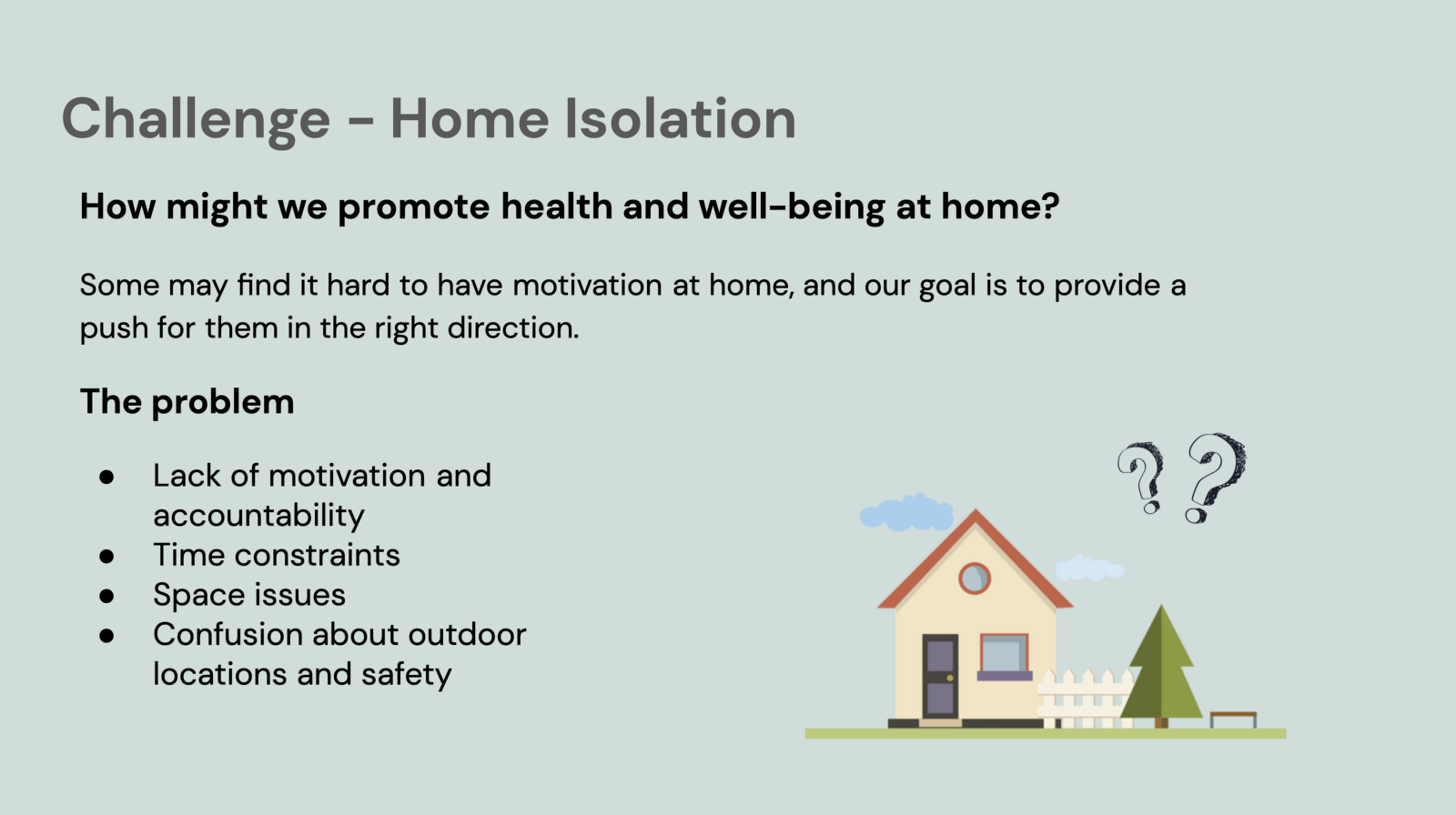
The first step of our research was conducted on online communities such as Facebook and Reddit in Diet and Fitness, Body Building, Workouts for Lazy People, or r/homefitness, r/naturalbodybuilding, r/advice, r/bodyweightfitness respectively. My team and I joined social groups, posted in discussion boards, and messaged users on how their routines have been looking since lockdown started. These were our main findings:

Conducting user interviews for deeper insights on our potential user base.
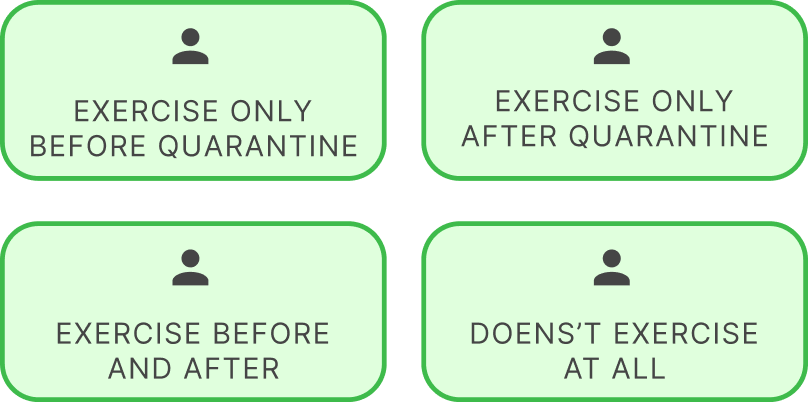
The findings from online communities shed light on what the major obstacles were for people in quarantine. With pain points in mind, we then generated an online questionnaire to be sent out to further understand individual exercise habits during the stay-at-home order. Surveyed users were split into four categories:
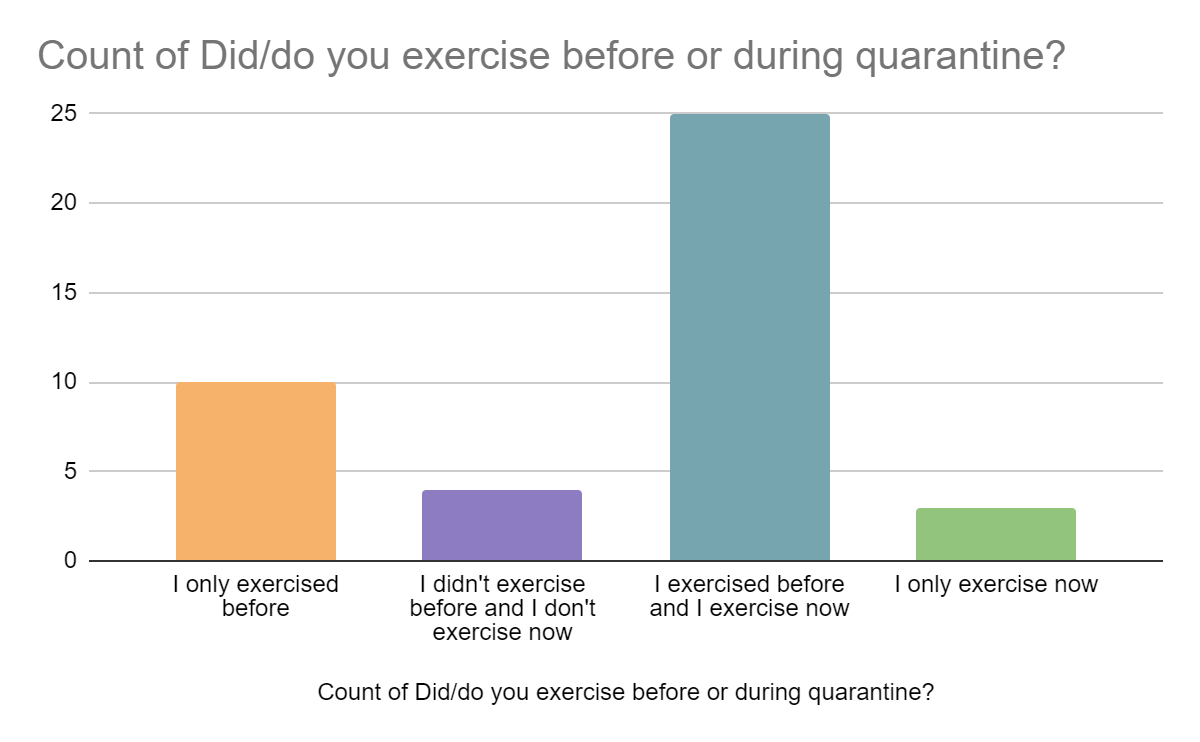
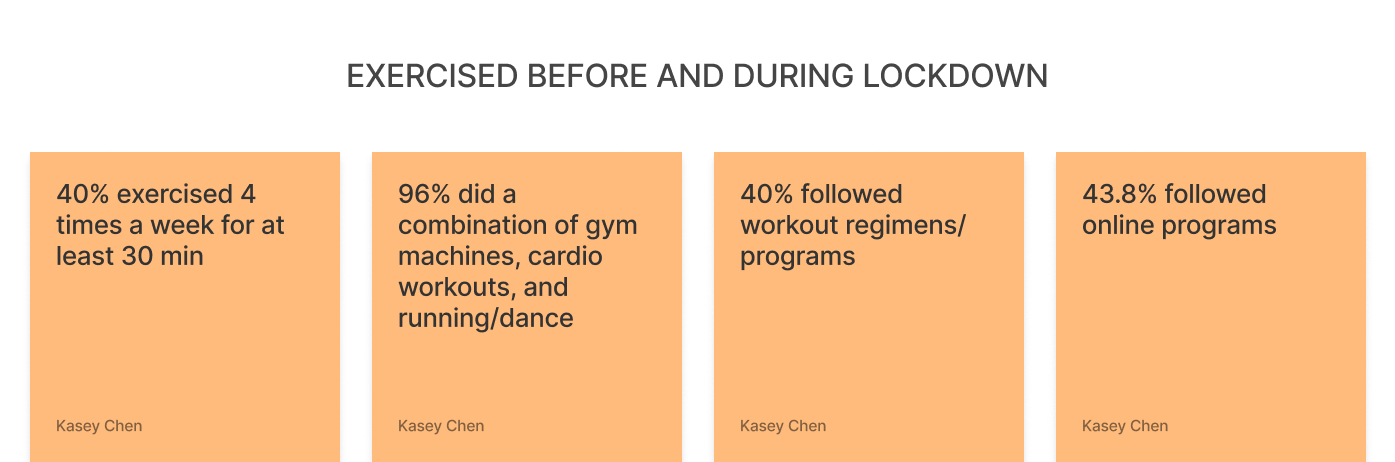
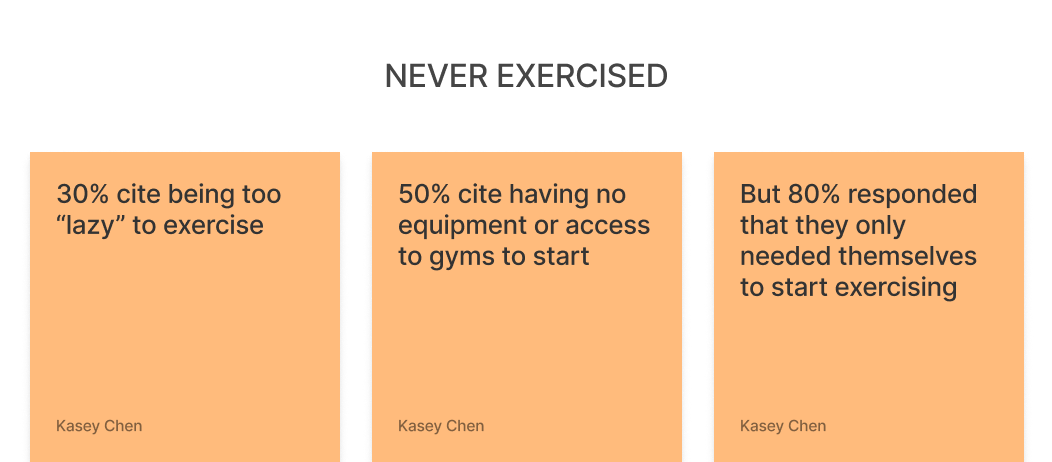
The survey included questions about exercise habits before and after the lockdown, daily routines, as well as their current working and housing status. Out of 42 total responses, 25 exercised before and during quarantine which would then become our target audience. The most significant findings are reported below:
Our key findings and insights from user interviews:
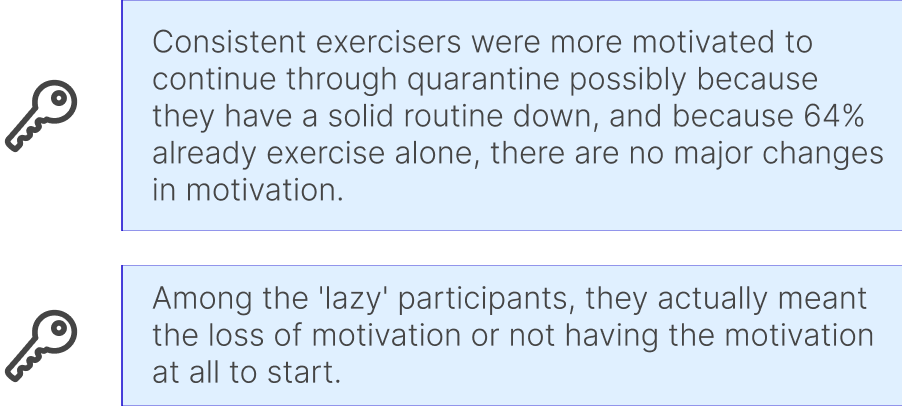
After getting more specific and quantitative data from the survey, we then proceeded to schedule one on one virtual interviews with responders from each of the four categories. This was to better understand nuanced situations that our survey may not have covered and to uncover any potential leads we may have missed.
" To be frank, I am a lot of times [too] lazy to exercise and usually I occupy my time with other things. Classes and other responsibilities like organizations and work can get a lot sometimes. Because of this, I don’t even think about exercise since my mind focuses on something else. " - Anon
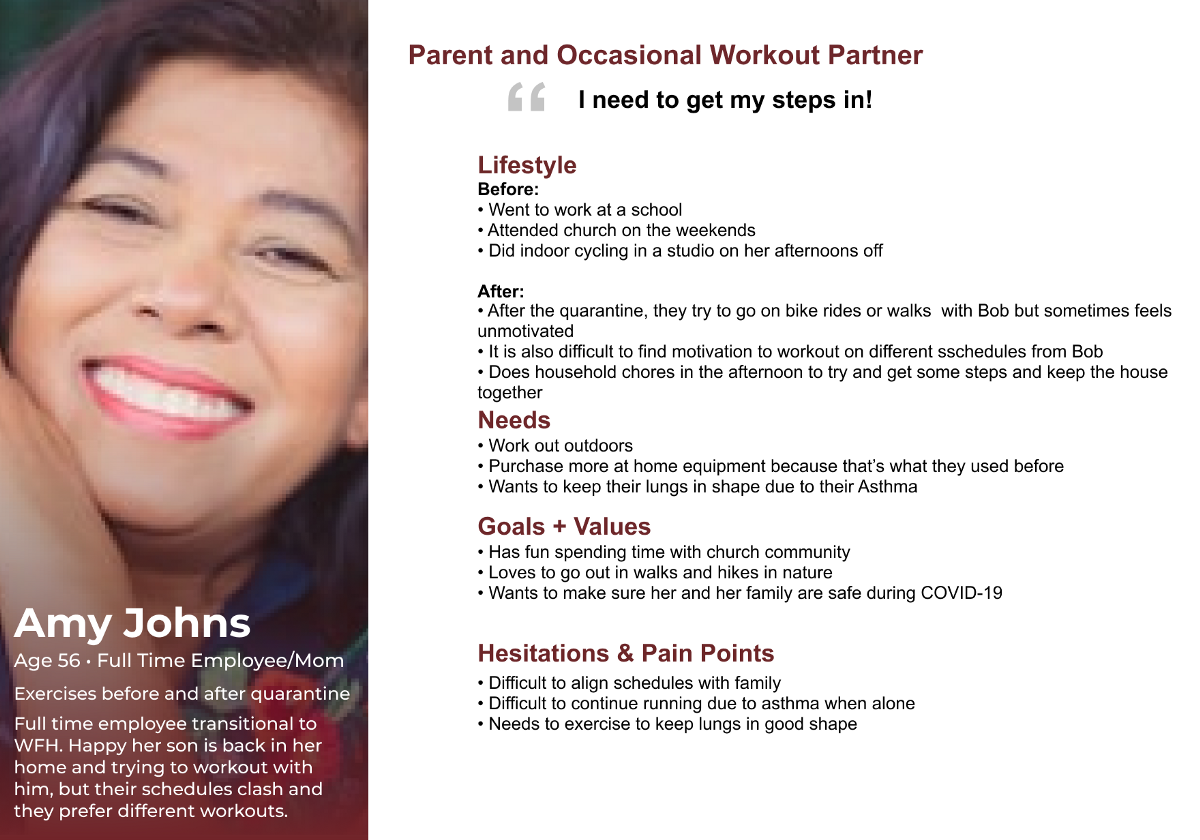
Based off of the archetypes from our user research we created the main user personas from common theme of people. These are the key users we would target when creating and marketing our product:
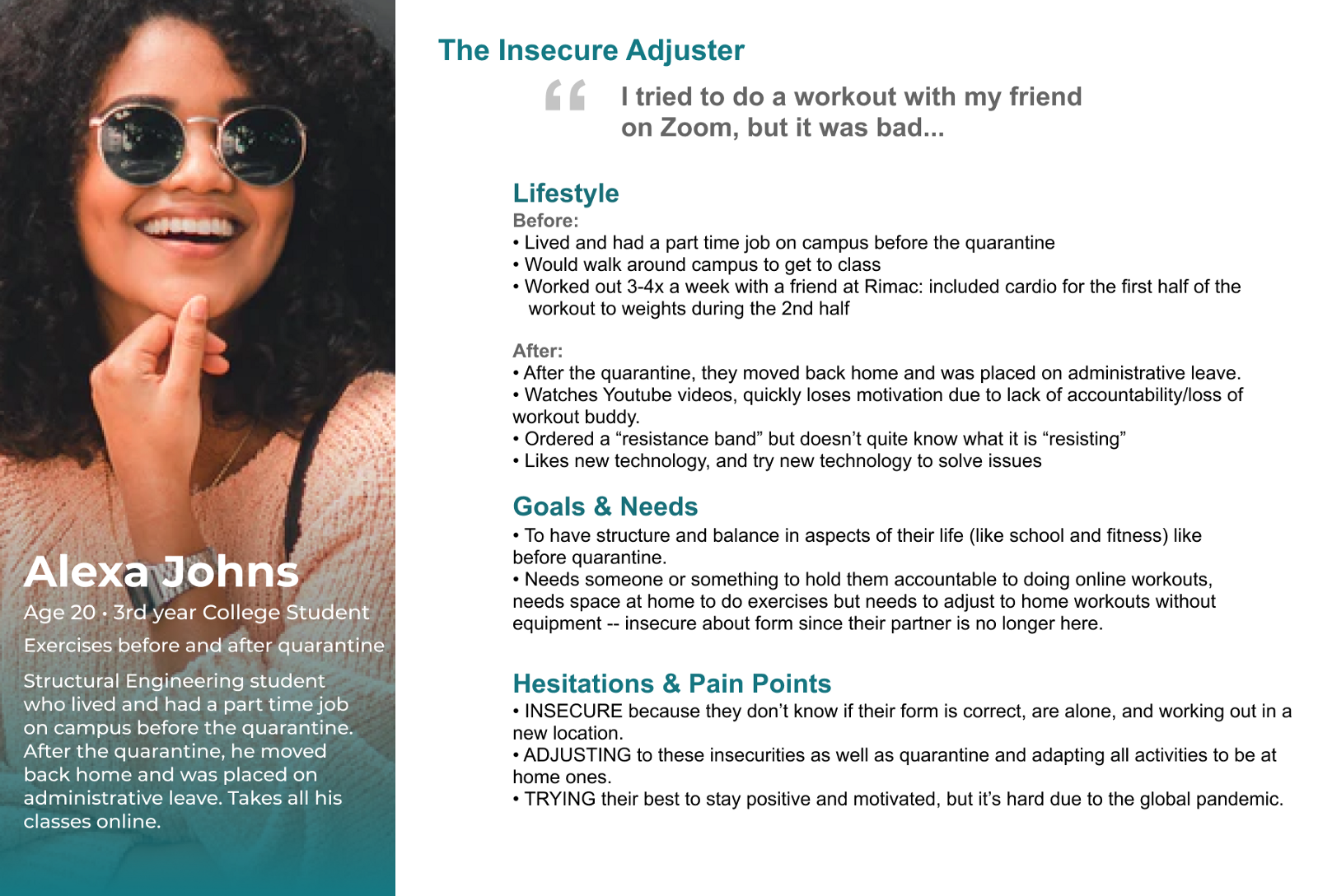
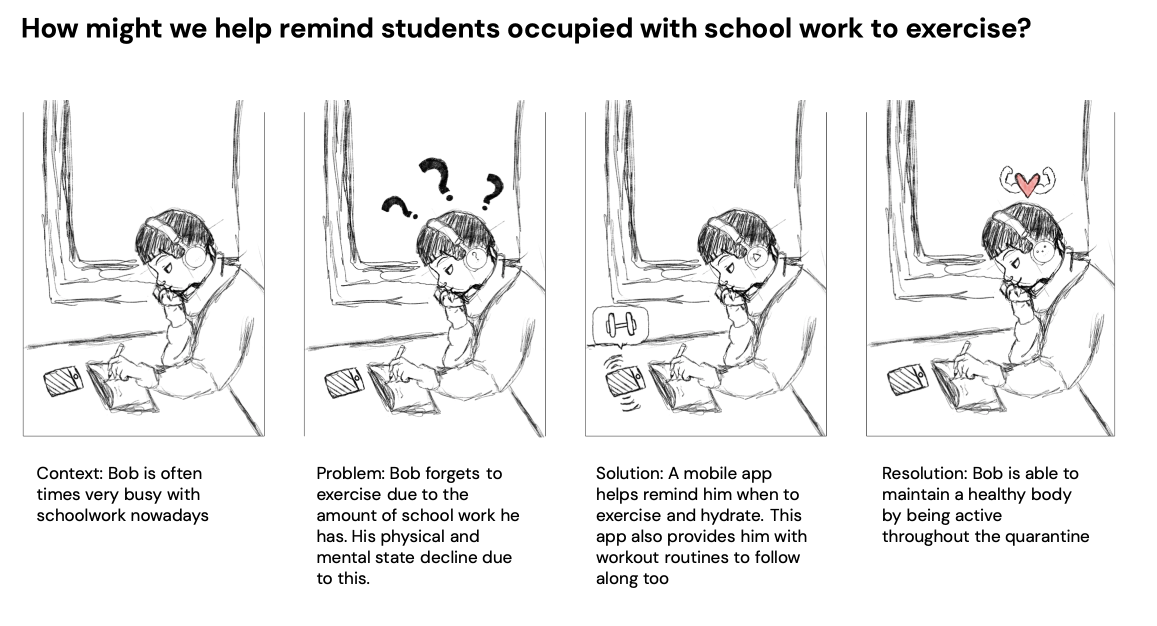
Scenario 1 is mostly targeted towards students who have switched to online learning. Here, students may feel swamped with work and oftentimes will forget when to exercise. Our mobile app helps remind the student when they should exercise, stand up, and hydrate. Additionally, this app will also suggest basic exercises and stretches a student can do while at home.
Scenario 2 is for those who used to workout with trainers or others who taught them how exactly to workout with the correct form. The solution app helps people connect with others to learn more about what they can do and how exactly to do it in terms of working out.

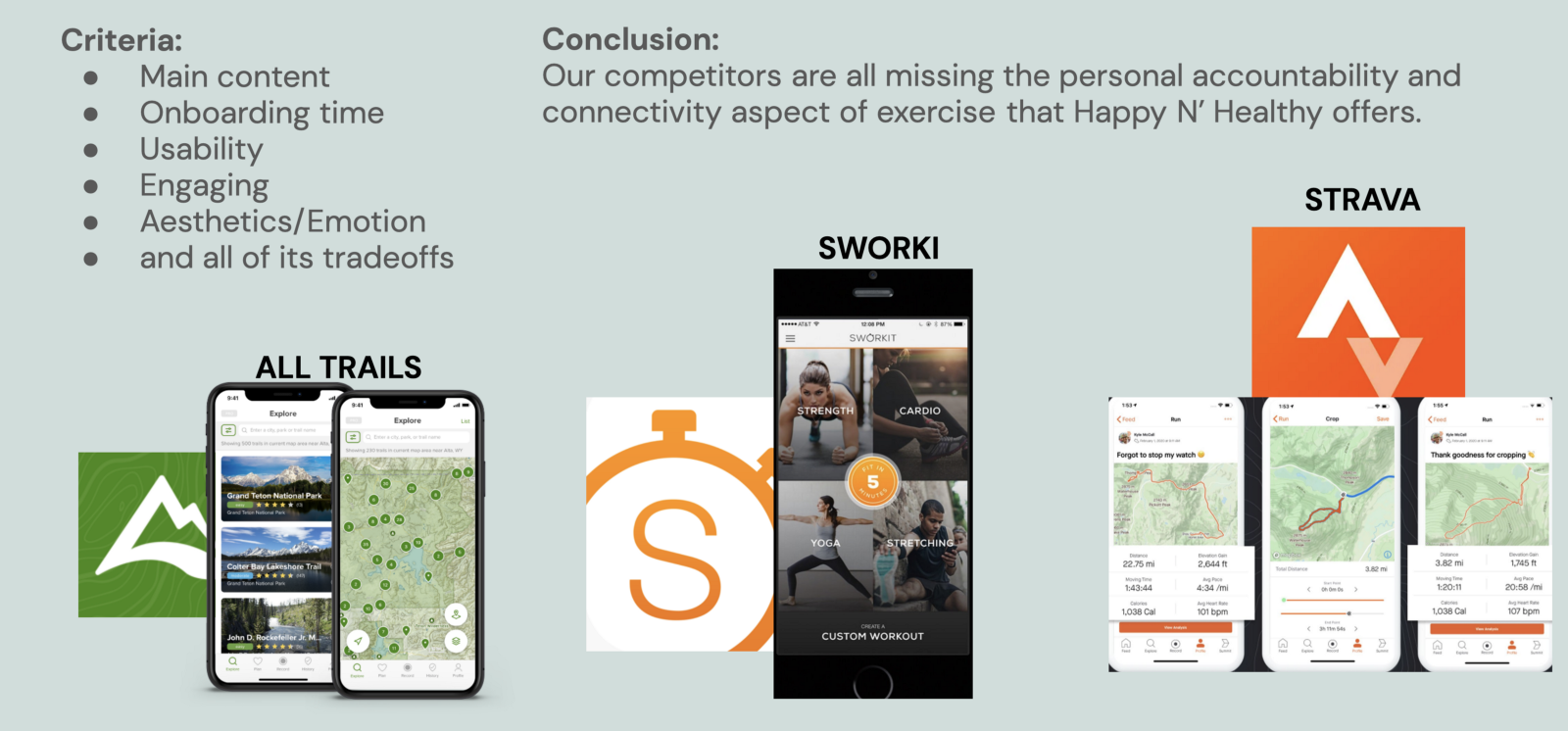
Now that we have a solid user base determined and proper solution to strive for, we needed to figure out what features to include. To ensure our product is unique and has not already been created in the app store, we conducted several analyses of similar apps below:
Paper prototyping helped us to determine the pages and flows needed.
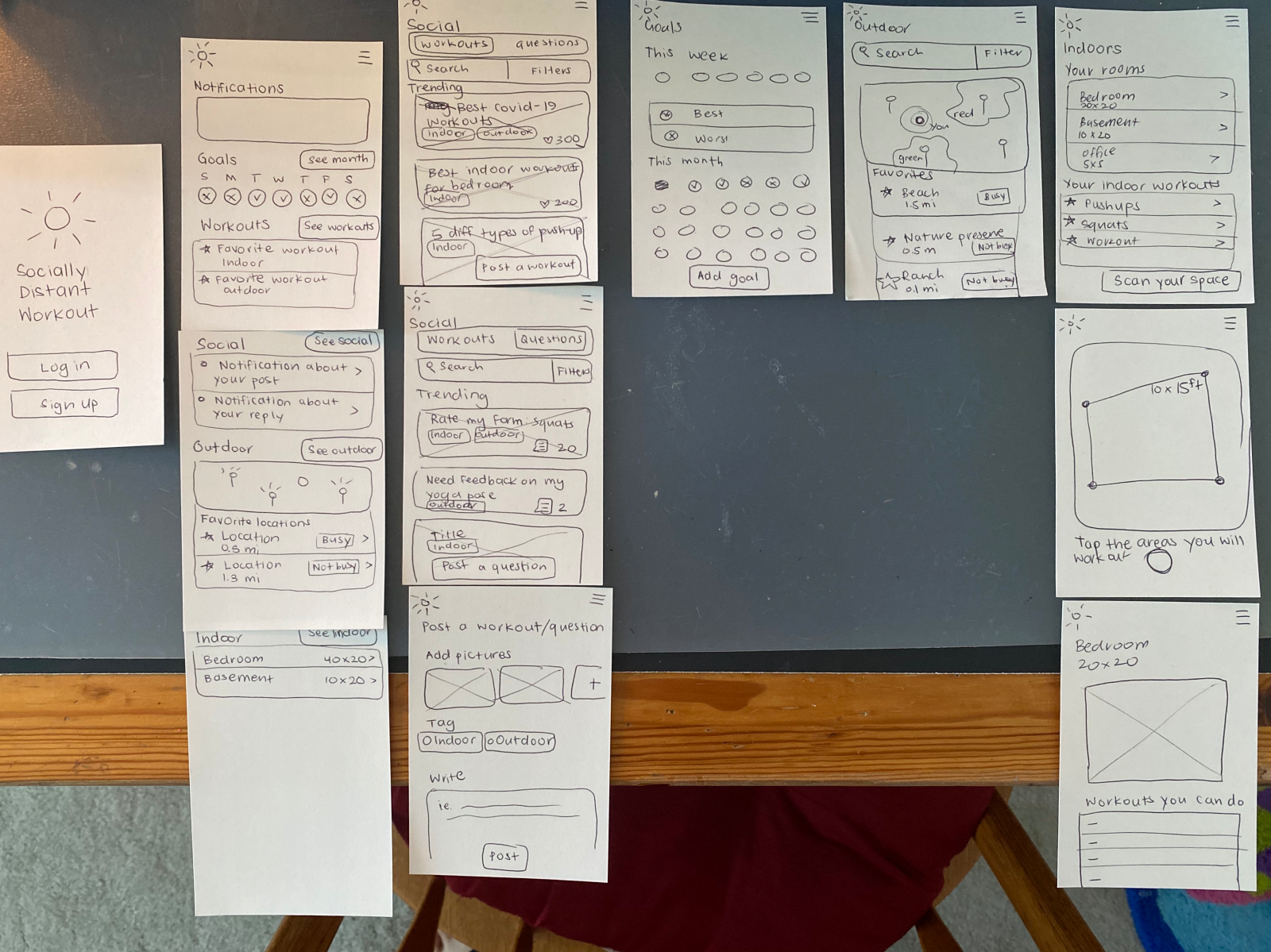
Now that we had a solid understanding of the main product users, their background, and the issues as well as the general solutions they would be receptive toward we could begin to prototype product designs. Our personas would be most receptive to incorporating their phone into their routine so we decided to create a mobile app.
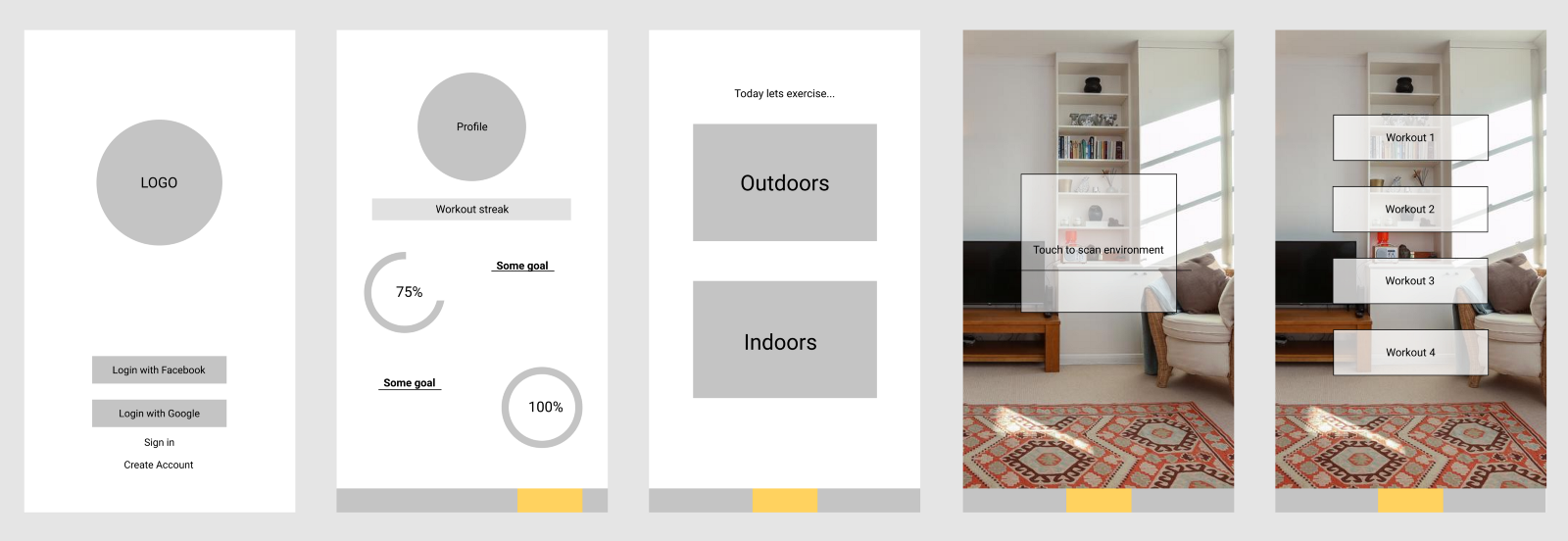
Giving users tasks to complete in our lo-fi lets us smooth out any hiccups for our next iteration.
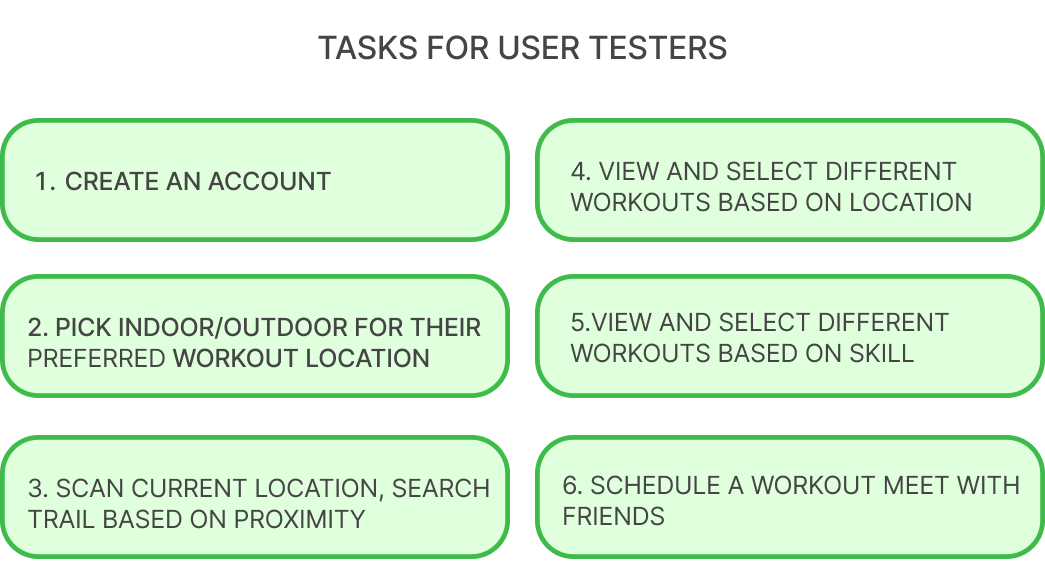
We performed five user tests on our low-fidelity prototypes. We created tasks and asked questions for the participants to complete to see if our app was designed in an understandable interface to someone who would be new to it. Through this method of testing, we can see where users potentially get stuck in the user flow, or are unable to locate actions.
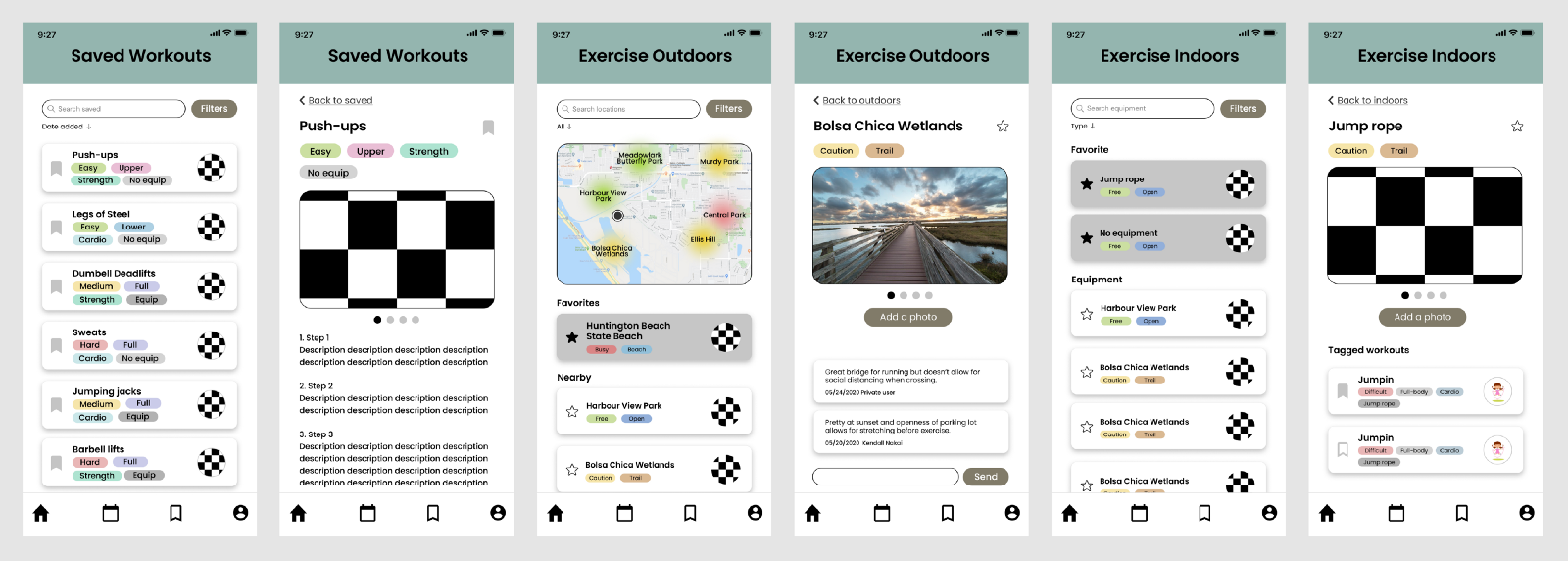
After getting feedback on our first user test, we created a hi-fi interactive version to run through a second user test. We asked users to perform the same tasks as above, as well as let them click around on their own. Some important feedback points are highlighted below:
1. Some features lack intuitively, a description or tutorial would be helpful.
2 . The app seems like it has a lot of features - users don't know where to start.
3. The exercise with friends option would boost motivation to start a routine, if they didn't have one already.
Our final prototype is designed to feel like a social app with a focus is on health and wellbeing. Users are first prompted to create an account so that all goals and progress made is saved. The home screen focuses on starting a workout and includes progress rings that indicate how far along each user is with their weekly goals.

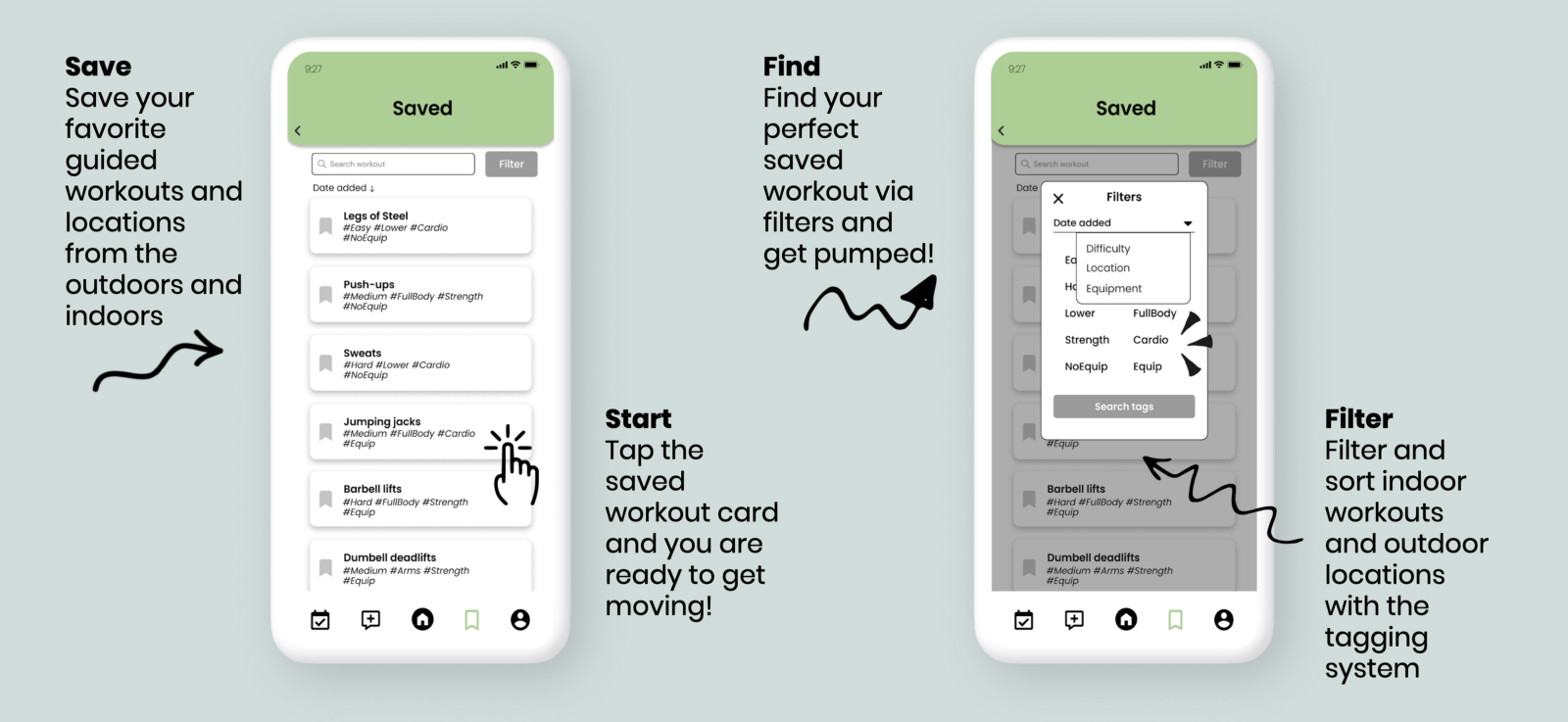
Calling back the initial problem users had of adjusting routines to life at home, and the confusion surrounding safe outdoor workouts, we implemented a system where users can choose to either exercise indoors or out. By choosing indoors, they are guided to a list of routines they can filter through to fit their needs. For outdoor workouts, a list of nearby parks and rec stations are compiled and shown to the user through an activity heatmap using GPS hotspots. This shows the user which parks are crowded and unsafe for social distancing.
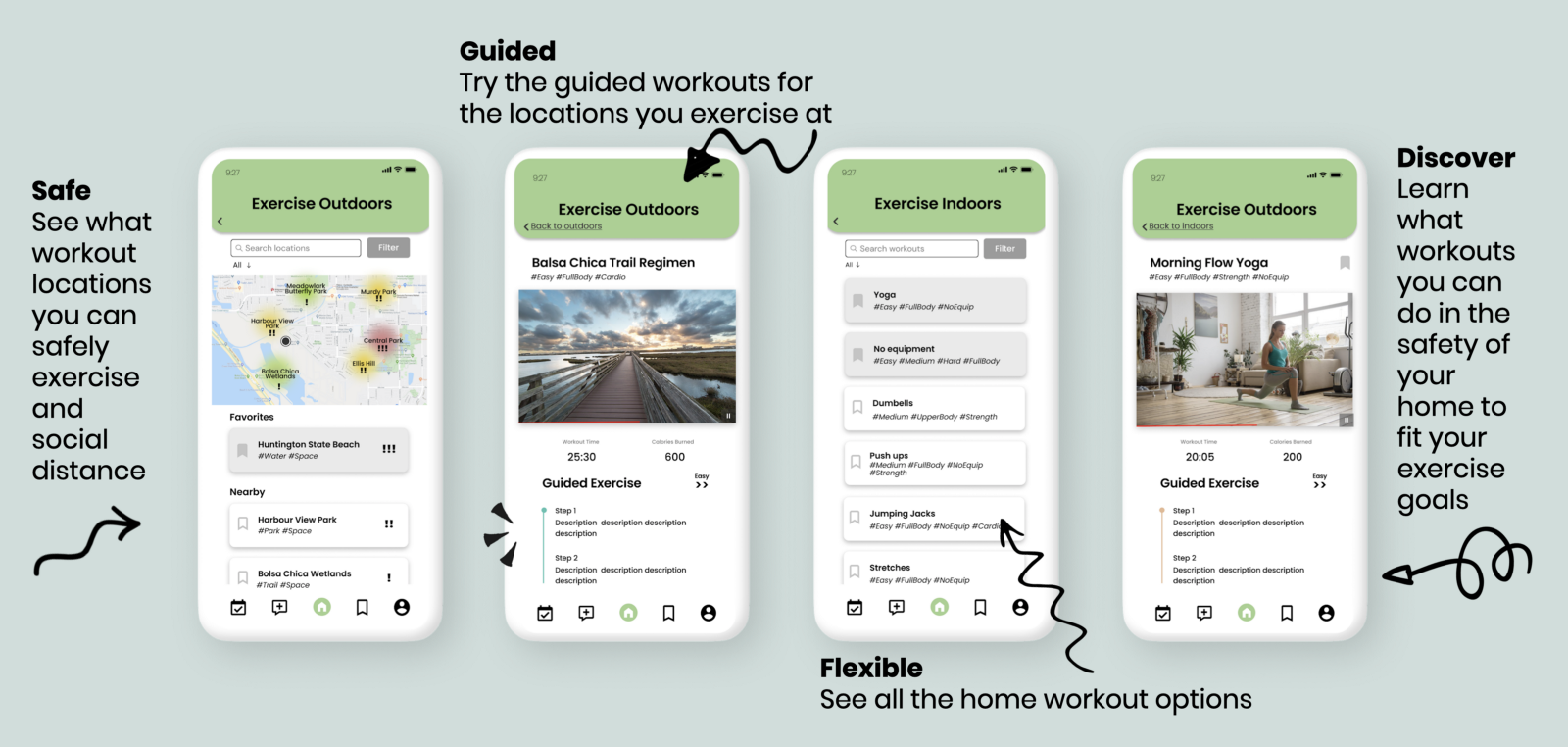
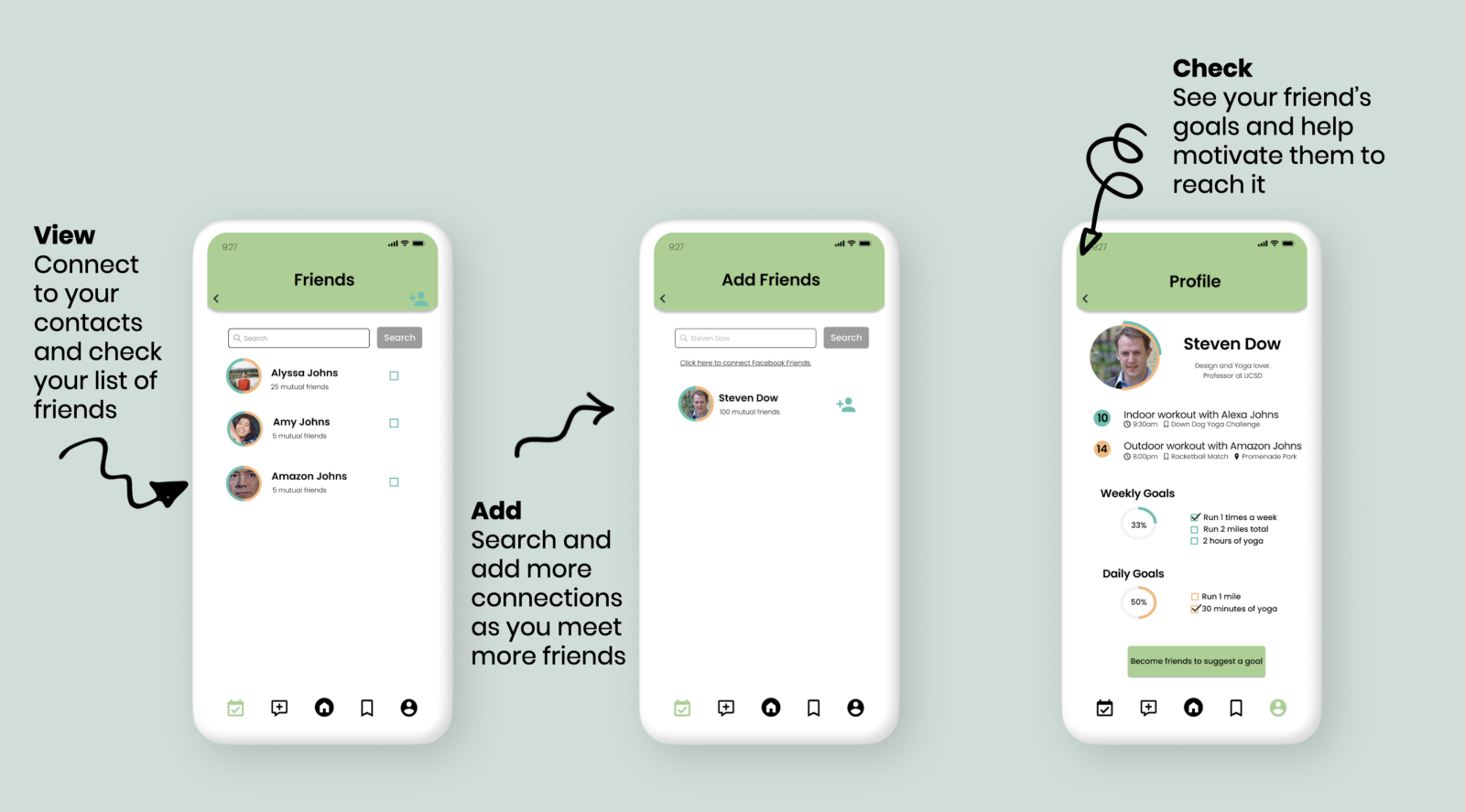
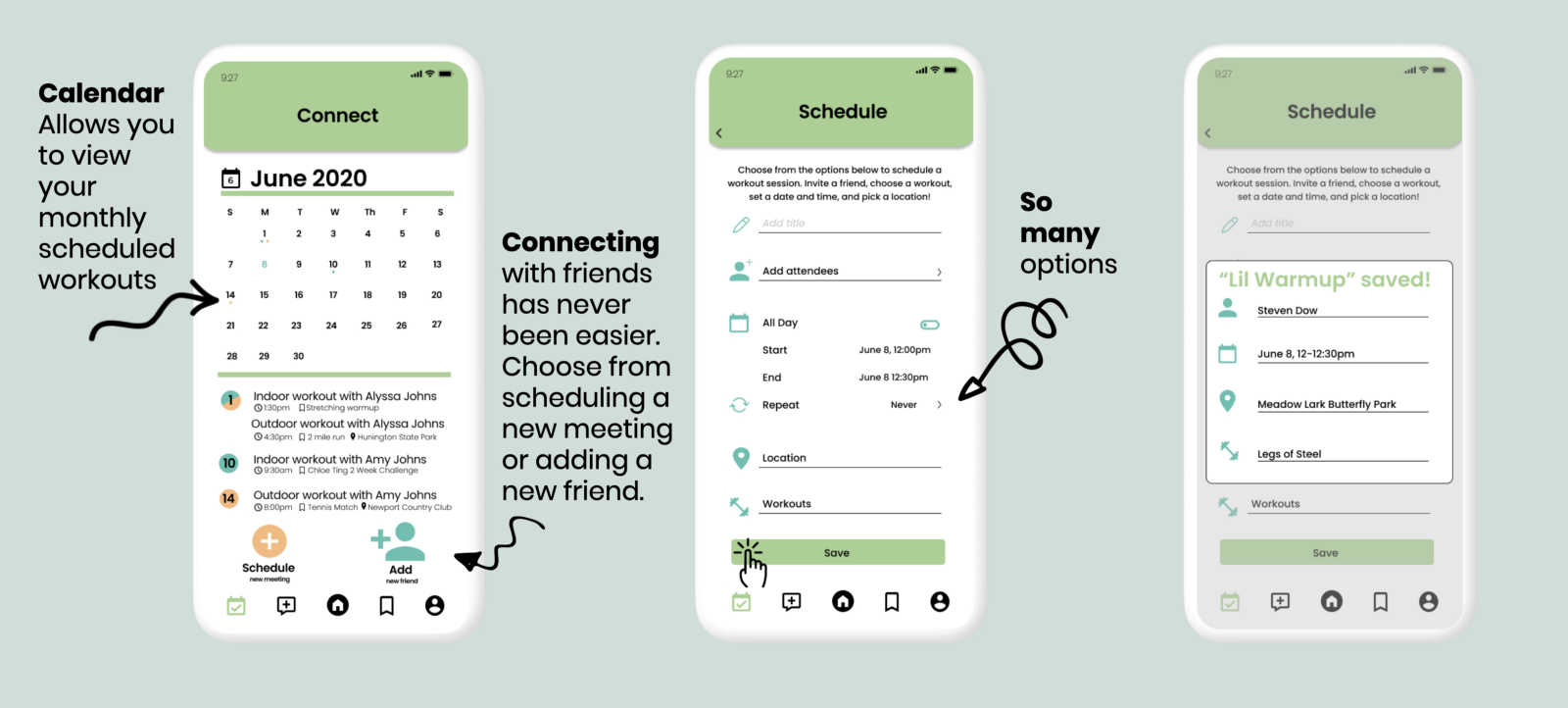
To help motivate users that claimed to be too 'lazy' and to give confidence to those who wanted a partner, we added a friends function that connects to the users contacts or other social media. This allows them to view their progress in meeting their goals and engage in friendly competition. Together, they can start on the same routines and workouts as well as schedule workout times together.
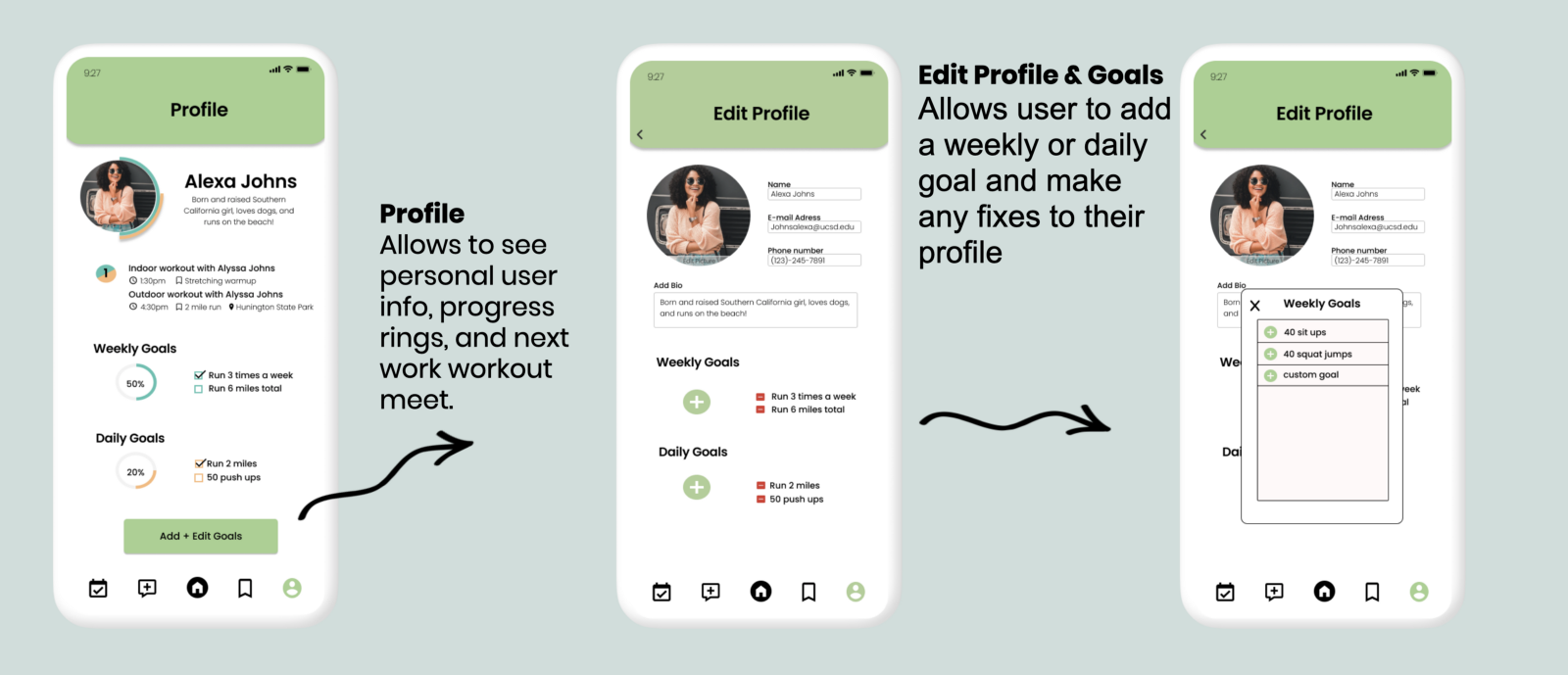
Lastly, the user's profile page allows them to keep track of their own progress and add weekly or daily goals. We wanted to make this as accessible as possible, as our competitor apps required a subscription in order for any goals to be made. We felt that they were obstacles keeping potential users from purchasing a subscription as they were not allowed to explore the full features of the app.
Throughout our iterations, we updated our color scheme to a livelier green and redid our navigation bar to be more interactive. We also added in many more small tweaks such as how the filtering options would flow, the display of individual workouts, and the layout of saved workouts. Additionally, we removed the 'scan a room' function that was to be used indoors as we felt it was adding too much at once for the app.

Creating a product to solve home isolation and working out during the stay-at-home order was an exercise in user-understanding, iteration, and creating something that has the potential to truly help people at a low cost. We found that communication is difficult when a group is unable to meet up in person: we had to adapt to having long work sessions through zoom.
Additionally, we found that we worked best when we met up during shorter periods of time to discuss then finish individual parts on our own time - working together is great but sometimes it made things awkward and indecisive.